Search
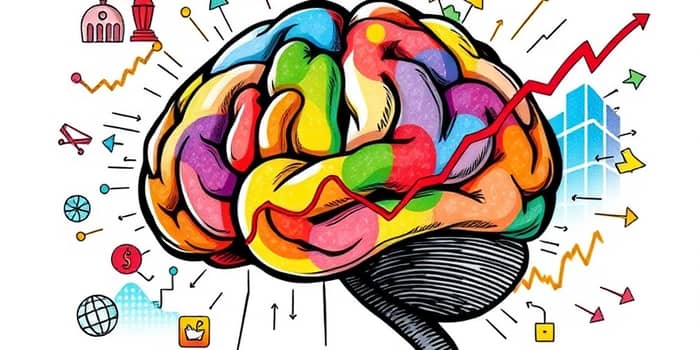
Markets are not just about numbers and charts.
They are deeply influenced by the complex web of human psychology that shapes every decision.
From investors to consumers, our actions are often driven by invisible forces.
This article uncovers how psychology challenges traditional economic assumptions.
It provides a roadmap to understand and leverage these insights.
Emotions and cognitive biases can lead to irrational outcomes in finance.
By recognizing this, we can navigate markets more effectively.
The integration of psychology with data analysis transforms our approach.
Key theories explain why people deviate from rational behavior.
These concepts bridge human motivations with market dynamics.
These ideas reveal the subconscious drivers behind market trends.
The role of fear and greed is pivotal in creating volatility.
Understanding them helps predict and respond to market shifts.
Psychology plays out vividly in historical and modern events.
Case studies provide concrete evidence of its impact.
These examples demonstrate the power of social factors in markets.
They underscore how digital platforms accelerate psychological effects.
Empirical studies, like Caltech's analysis, support these observations.
A structured process can help apply psychological insights.
This approach enhances both investor and consumer strategies.
Systematic research into subconscious drivers uncovers hidden trends.
Tools like sentiment analysis integrate psychology with data.
This leads to more accurate predictions and personalized approaches.
Psychology explains market inefficiencies and business opportunities.
It affects outcomes from investment decisions to marketing success.
The fusion of psychology and analytics offers a competitive edge.
For example, sustainability appeals tap into ethical motivations.
Real-time analysis helps adapt to emotional market shifts.
There are debates and gaps in applying psychology to markets.
Understanding these helps refine strategies and avoid pitfalls.
Future advancements in AI and data fusion may address these.
They promise more precise insights into human behavior.
This evolution will enhance predictive models and tools.
This table summarizes essential concepts for quick reference.
It helps in identifying patterns during market analysis.
Applying these can lead to more informed decisions.
Qualitative tools are crucial for deep insights.
They go beyond numbers to understand human motivations.
These methods reveal underlying emotional triggers.
They complement quantitative data for a holistic view.
For instance, gift-giving norms were uncovered culturally.
The integration of psychology is evolving rapidly.
It promises to reshape how we interact with markets.
AI and big data will enhance psychological profiling.
Personalized experiences based on behavior will become standard.
This shift offers opportunities for innovation and growth.
Embracing this human factor is key to future success.
By staying aware, we can navigate complexities with clarity.
References