Search
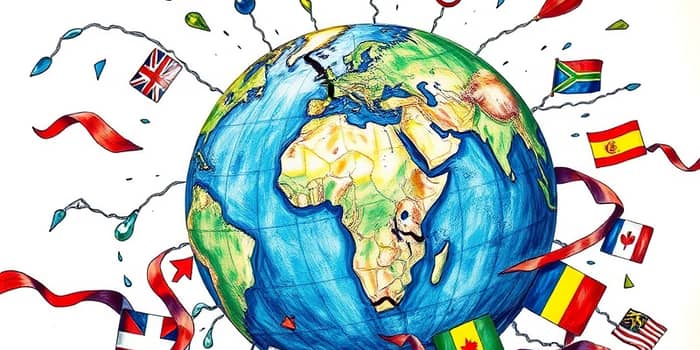
In 2026, the world faces a pivotal moment where resource scarcity transforms from an abstract concern into a tangible crisis. Scarcity is becoming a defining geopolitical driver, fundamentally altering international relations and power structures.
This article explores how dwindling resources are reshaping global dynamics, offering insights to inspire proactive solutions. It delves into data, competition, and human impacts to provide a comprehensive view.
The urgency is palpable, with billions of lives and economic stability at stake. Global natural resource consumption is predicted to increase by 60% by 2060, underscoring the need for immediate action.
Resource depletion is accelerating at an alarming rate, driven by rising demand and finite supplies. This trend poses severe challenges to global sustainability and security.
Water stress is a critical issue affecting populations worldwide. Nearly four billion people already face severe water stress for at least one month annually, a number that continues to climb.
Key statistics highlight the scale of the problem:
Critical minerals are also in high demand for modern technologies. More than 30 new processing facilities are expected globally by 2026, yet supply risks remain high due to geographic concentration.
Nations are increasingly vying for control over scarce resources, leading to intensified global rivalries. China has emerged as a dominant player in this arena.
China maintains near-total control over many critical minerals and rare earth elements, leveraging this dominance as a geopolitical tool. This control allows China to influence global markets and technology access.
Western responses focus on reducing dependence through de-risking efforts. Efforts to reduce exposure to China's rare earths will accelerate, with new alliances forming to diversify supply chains.
Trade policies are shifting towards protectionism and regionalization in response to scarcity. This marks a departure from cost-driven globalization.
The US is expected to maintain historically high tariffs on critical minerals and strategic components. Similarly, China and the EU are tightening export controls on sensitive technologies.
These measures signal a move towards "friendshoring" and regional trade blocs. Other countries are introducing measures to protect industries, such as recent EU steel tariffs, further fragmenting global trade.
Resource scarcity has dire consequences for human well-being, particularly in terms of food security. Conflict and climate change amplify these effects.
Conflict is the greatest driver of hunger, worsened by climate shocks that are now constant threats. This has led to a significant rise in food insecurity globally.
The World Food Program reports alarming trends:
Countries like Afghanistan, Somalia, and Syria are among the most affected, highlighting the interconnected nature of crises.
Economic growth is slowing under the weight of resource scarcity and fiscal pressures. This limits the capacity for adaptive responses.
Global economic output is forecast to grow by 2.7 per cent in 2026, below pre-pandemic averages. Subdued investment and limited fiscal space contribute to this slowdown.
High debt levels further constrain economic activity. Global debt stands at 235% of GDP, with governments issuing record sovereign bonds for defense and industrial policies.
The race for self-sufficiency and new alliances defines the strategic landscape. Resource control is increasingly weaponized in international relations.
US-China great-power competition characterizes the structural geopolitical outlook for 2026, alongside a fragmenting global order. Heightened geopolitical risk persists due to various megatrends.
Resource-driven conflicts are on the rise, with trade under pressure from tariffs and export controls. Disrupted supply chains for critical goods and resources top global risk lists, threatening stability.
Ecological footprint data reveals stark disparities among nations. The following table shows select countries and their resource deficit days for 2026, illustrating the imbalance:
Only 15 countries globally have biocapacities exceeding their ecological footprints, such as Brazil, Bolivia, and Russia. This highlights the uneven distribution of resources and the challenges ahead.
Practical steps for nations and businesses include investing in diversification and sustainable practices. Collaboration and innovation are key to mitigating risks.
In conclusion, the geopolitics of scarce resources demands urgent and coordinated action. By understanding the data and trends, we can navigate this looming challenge with resilience and foresight.
References