Search
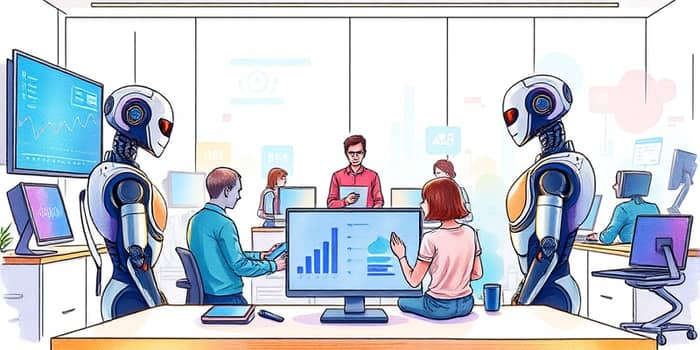
The dawn of a new industrial revolution is upon us, driven by the relentless march of automation and artificial intelligence. Automation adoption has reached critical mass, transforming how organizations operate and compete globally. This shift is not just about technology; it's about redefining human potential and adaptability in the workplace.
As we stand at this crossroads, the data paints a compelling picture. AI and automation could automate the equivalent of 300 million full-time jobs, yet simultaneously, they promise to create millions of new opportunities. Understanding this dual nature is key to navigating the future successfully.
The journey ahead requires a proactive mindset. By embracing change and focusing on reskilling, individuals and businesses can thrive. Global automation market is projected to reach approximately $226.8 billion in 2025, underscoring the scale of this transformation.
Automation is no longer a futuristic concept; it's a present-day reality. Most organizations now integrate automation tools into their daily operations.
AI adoption shows dramatic acceleration. AI adoption specifically shows dramatic acceleration, with demand for skills soaring across industries. This growth reshapes job markets and opens doors for innovation.
Workforce roles are evolving rapidly. Machines handle repetitive tasks, freeing humans for creative and strategic work.
The financial benefits of automation are staggering. By 2030, about $2.9 trillion of economic value could be unlocked in the United States alone.
Global potential reaches $28.7 trillion. Implementing automation yields quick returns for businesses willing to adapt.
Companies using automation report it helps them work faster. This efficiency translates into reduced costs and improved competitiveness.
These operational gains highlight why automation is a strategic imperative. Robotic Process Automation can deliver up to 800% ROI, making it a wise investment.
Different sectors experience unique impacts from automation. Finance, marketing, and manufacturing lead the way in adoption.
This table showcases tailored solutions driving efficiency. Automation empowers industries to innovate and scale effectively.
Employees report automating tedious tasks has increased their job satisfaction. Initial skepticism often turns into appreciation post-implementation.
As machines take over repetitive tasks, human roles shift towards higher-value activities. Digital skills are most affected by automation.
Assisting and caring skills remain resilient. This evolution demands continuous learning and adaptability from the workforce.
Job satisfaction rises with automation. Intelligent automation implementations have increased business users' task throughput by an average of 66%.
However, challenges persist. About half worry they'll need to retrain or upskill. Addressing this fear is crucial for smooth transitions.
Intelligent automation is becoming the norm through unified platforms. AI-driven workflows enable complex task management.
The convergence of IT and OT enhances robotics versatility. Real-time data exchange enables advanced analytics and automation.
These trends lay the foundation for Industry 4.0. AI adoption specifically shows dramatic acceleration in enabling smarter systems.
Digital enterprises emerge from this integration. Automation adoption drives innovation across all sectors.
Adopting automation isn't without obstacles. Skills gaps and resistance to change can derail projects.
Technical hurdles often lead to failures. Invest as much in training and change management as in technology for success.
Start with pilot projects to build momentum. Redesign workflows for collaboration between people and machines.
Workforce preparation is critical in this process. Governance models must evolve to manage risks effectively.
Automation adoption varies worldwide. Understanding regional nuances helps in crafting effective strategies.
Global distribution influences market dynamics. AI and automation will also create millions of new roles across regions.
Adapting to local contexts ensures inclusivity. Automation is table stakes for staying competitive globally.
To thrive in this new era, organizations must embrace key principles. AI differentiates leaders from followers.
Move beyond simple automation to AI-driven decision-making. AI is the differentiator in personalizing workflows.
Hybrid work models optimize human and machine strengths. Governance is urgent for managing agentic systems safely.
By following these imperatives, businesses navigate the future with confidence. Adaptability becomes the cornerstone of success in an automated world.
References