Search
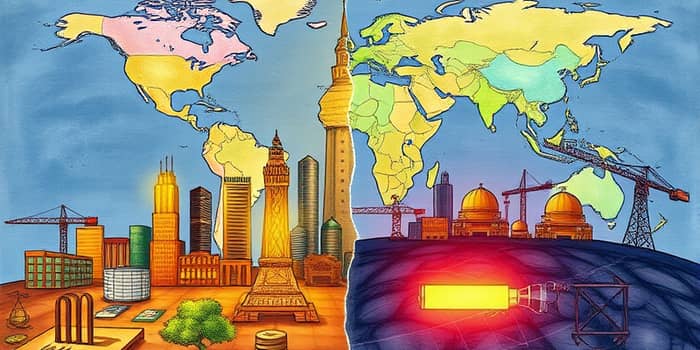
The global economy in 2026 stands at a crossroads, marked by a stark divergence in growth that leaves no sector untouched.
This uneven landscape, driven by rapid technological adoption and shifting policies, challenges businesses and investors to navigate unprecedented disparities.
Understanding these gaps is not just about numbers; it's about seizing opportunities in a fractured world and building resilience for the future.
As we delve into this analysis, we uncover the forces reshaping industries and regions, offering practical insights to thrive amidst change.
Projections indicate a mixed picture, with overall growth masking significant variations.
Global GDP is expected to rise slightly, but this aggregates wildly different sectoral performances.
In the US, growth may accelerate to 2.7% YoY, supported by stable trade dynamics.
Yet, beneath this surface, unemployment is set to creep up, with forecasts pointing to 4.2% by end-2026, reflecting a softening labor market.
Inflation remains a concern, with PCE measures hovering around 2.3%, but core goods face pressure from tariffs.
Consumer spending shows resilience, yet it diverges sharply by income level.
High-income households benefit disproportionately from policy changes, boosting sectors like luxury and travel.
This sets the stage for a deeper exploration of where growth is concentrated and where it lags.
The divide between sectors is perhaps the most dramatic aspect of 2026's economic story.
AI-adopting industries are surging ahead, while others struggle under the weight of trade pressures and labor challenges.
Professional and business services lead the charge, driven by automation and efficiency gains.
Similarly, finance and healthcare see robust growth, contributing significantly to GDP.
In contrast, manufacturing and construction face headwinds, with declines in activity and job losses.
For instance, industrial output in some regions has fallen by over 3%, highlighting the strain.
To illustrate these disparities clearly, here is a breakdown of key sectors:
Productivity gaps are widening, with information and professional services leading the way.
Leisure and hospitality, however, fall behind, struggling to keep pace with technological advances.
Investment patterns reflect this shift, with funds flowing into AI and infrastructure projects.
This sectoral analysis reveals critical trends for strategic planning and adaptation.
Disparities are not uniform across geographies; regional contexts amplify or mitigate these gaps.
In the US, growth is accelerating, but challenges like labor market softening persist.
Higher-income spending drives a temporary boost, yet inflation remains above target, complicating policy decisions.
India shows a strong start to the fiscal year, with real GDP growth around 8%.
However, uncertainties from US tariffs could slow this momentum, offset by services exports.
China moderates to about 4.5% growth, grappling with a property downturn and overcapacity issues.
Key regional disparities include:
These regional case studies underscore the need for localized strategies.
Businesses must tailor approaches to each market's unique dynamics and risks.
Several interconnected factors are fueling these economic divides, each with profound implications.
AI and productivity gains are at the forefront, revolutionizing labor-intensive sectors.
Concentrated in tech and finance, these advancements create early winners but leave others behind.
Tariffs and trade policies add another layer of complexity, impacting manufacturing and exports.
US tariffs on steel and aluminum, for example, raise goods inflation and curb industrial activity.
Demographics and labor market changes play a crucial role, with slower workforce growth from aging populations.
Softening conditions, such as rising unemployment, affect wage growth and consumer confidence.
Policy decisions, from tax benefits to fiscal stimulus, further skew outcomes.
High-income households gain more from tax changes, widening income inequality.
Other drivers include regional infrastructure gaps and overcapacity campaigns in sectors like steel.
To summarize, the major drivers are:
Understanding these drivers helps in anticipating shifts and crafting resilient responses.
The outlook for 2026 and beyond is fraught with both challenges and potential breakthroughs.
Upside risks include the broader spread of AI productivity gains and sustained fiscal support.
If managed well, these could stabilize growth across more sectors, reducing disparities.
Downside risks loom larger, with deeper labor slowdowns and persistent tariff impacts.
Emerging markets face export weaknesses, while property downturns in China drag on global demand.
For policymakers, especially the Fed, balancing inflation targets with labor market support is critical.
They may lean toward easing if job growth falters, aiming to cushion the economy.
Investment implications are significant, with opportunities in emerging market equities and AI-focused sectors.
Sector rotation strategies could capitalize on these trends, but volatility from policy uncertainty remains a threat.
Practical steps for businesses and investors include:
Embrace this period of change as a catalyst for innovation and adaptation.
By minding the gap, we can build a more inclusive and dynamic economic future.
References