Search
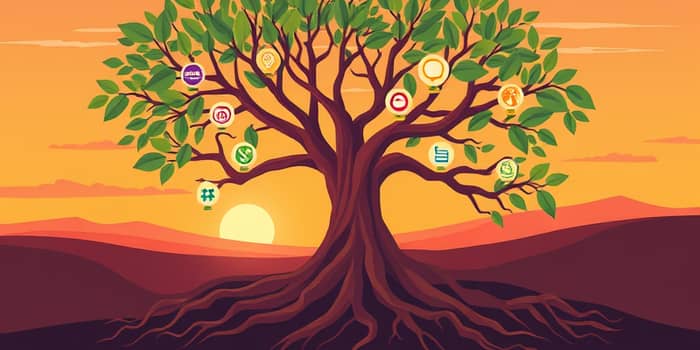
In today's fast-paced business environment, the allure of quick wins can overshadow the profound impact of long-term vision. True success isn't just about immediate profits; it's about crafting a legacy that endures across generations.
By embracing sustainable scaling through holistic assessment, businesses can navigate uncertainty and thrive. This approach prioritizes resilience and value creation over fleeting achievements.
A legacy is built on intentional planning that aligns every decision with a broader purpose. It transforms challenges into opportunities for growth and innovation.
Short-term tactics may offer temporary relief, but they often come at the expense of future stability. Long-term strategies, on the other hand, foster market penetration and resilience in uncertainty. They ensure that growth is not just rapid but sustainable.
Consider how 80% of business growth stems from maximizing core operations. This focus on what already works can drive innovation and efficiency.
Holistic alignment between owners and employees cultivates a shared vision. Viewing the business through customers' eyes strengthens the value proposition for loyalty.
Benefits extend beyond financial metrics. Higher employee retention, productivity, and morale are natural outcomes of a committed long-term approach.
Growth strategies generally fall into two categories: organic and inorganic. Understanding both is crucial for balanced development.
Organic growth involves internal efforts that build from within. It's about leveraging existing strengths to expand gradually.
Inorganic growth, through methods like mergers and acquisitions, offers a faster route to expansion. It provides quick access to new products, markets, and brands.
Modern businesses blend timeless principles with new accelerators. The key is to innovate while staying grounded in core values.
Digital transformation, such as adopting mobile payments, is essential for long-term survival. It provides big-picture insights and enhances customer experience.
Customer-centric innovation, driven by feedback, helps edge out competitors. Data-driven decisions enable agility and precision in strategy adjustments.
Developing a long-term plan requires clear steps and commitment. Start by assessing your business holistically, including financials and goals.
McKinsey's framework emphasizes six elements: core innovation, adjacencies, people focus, innovation culture, sustainability, and portfolio reallocation. This holistic view ensures comprehensive growth.
For example, a family firm with $50 million in revenue faced a dilemma with succession. By evaluating options like external hires or sales, they crafted a tailored plan.
Succession ensures a smooth transition of ownership and management. It minimizes disruption and preserves the legacy and values of the business.
Family businesses must assess dynamics carefully. Selecting and training successors is a critical step that requires foresight.
A four-stage framework can guide this process: assessment, options exploration, selection, and implementation with monitoring. This structured approach reduces conflicts and ensures alignment.
For instance, a beverage company founder used trusts to transfer minority stakes to children in sales and finance roles while retaining control. This preserved the business's legacy and operational stability.
Long-term strategies are not without risks. Short-term focus can erode legacy, and misaligned family dynamics may lead to conflicts.
Key risks include loss of control, unequal inheritance, and tax burdens without proper planning. Ongoing reviews and data-driven adjustments are essential to mitigate these.
Metrics like the 80/20 rule for core and adjacency growth provide benchmarks. Real-world cases, such as a $22 million business using an IDGT for tax reduction, illustrate practical applications.
Ultimately, building a legacy is about intentionality. It's a journey that requires patience, innovation, and a steadfast commitment to values. By embracing these strategies, businesses can create enduring impact that transcends generations.
References